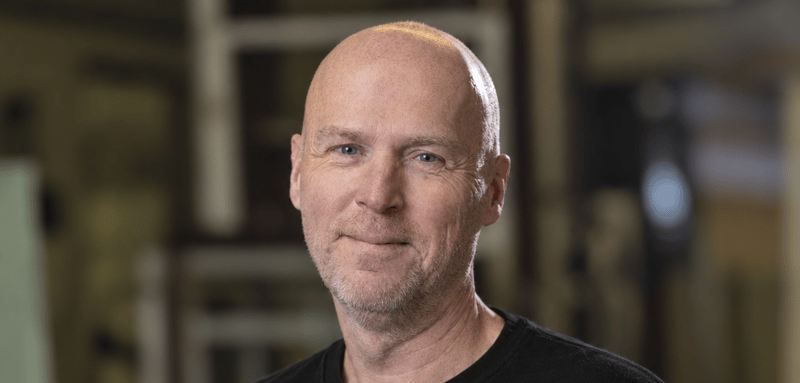
When Stefan Lindqvist bought Penslar & Fönster in 2008, he had no plan to become a window renovation specialist.
Stefan trained as a building painter and started his first company, Måleriett i Stockholm AB, at the age of 22. That was where he first encountered window renovation – through a customer assignment his employees were unable to complete.
– The customer started grumbling, and I could see this wasn’t going to work, he says.
He called the owner of Penslar & Fönster to get help. The reply was surprising: You can buy the company if you want. So he did.
The timing was bad. Shortly afterwards, the financial crisis hit, and in 2009 the company was effectively bankrupt. But Stefan did not give up – he could see that the business was actually making money. The following year, he and his wife Katja decided to go all in, and Katja left her job at KPMG to join the company.
From 12 to 44 million – in the same premises
At the time, the company had revenues of 12–14 million Swedish kronor and 8–10 employees. Today, revenues are around 44 million kronor, with 22 permanent employees and roughly the same number of subcontractors – still operating from the same workshop premises in Nacka.
– I thought we needed larger premises in order to grow. But the solution lay elsewhere, says Stefan.
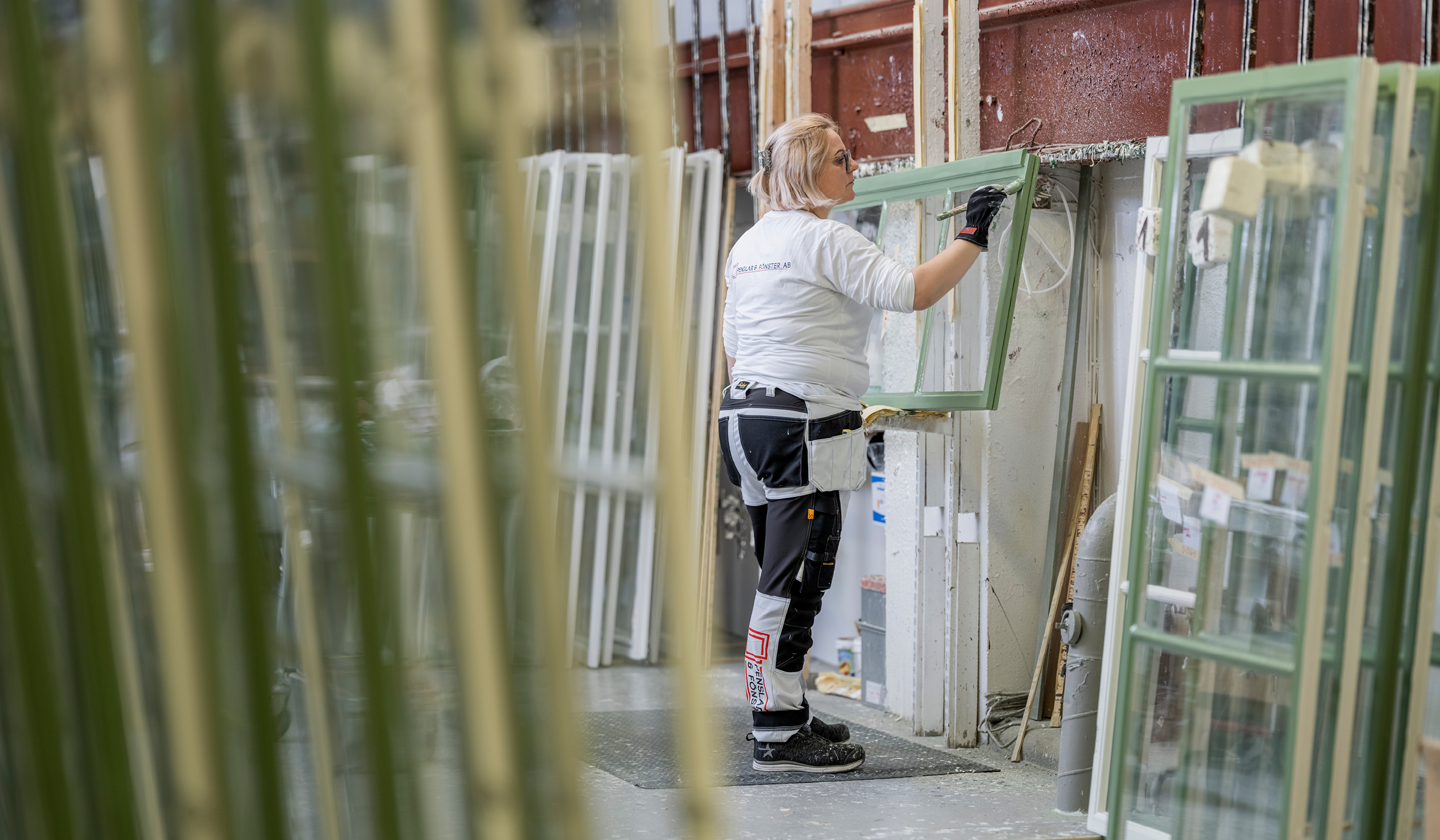
Instead, they focused on structure. They measured how long each step took – cleaning, glazing, puttying, painting, drying and installation – and built a production flow with strong efficiency, adapted to the craft.
Today, everyone knows what each station is expected to deliver every day. If production needs to be increased, they add another station and another employee – instead of pushing people harder. According to Stefan, this creates calm and has led to more reliable delivery, higher quality and lower sick leave.
The Penslar & Fönster standard
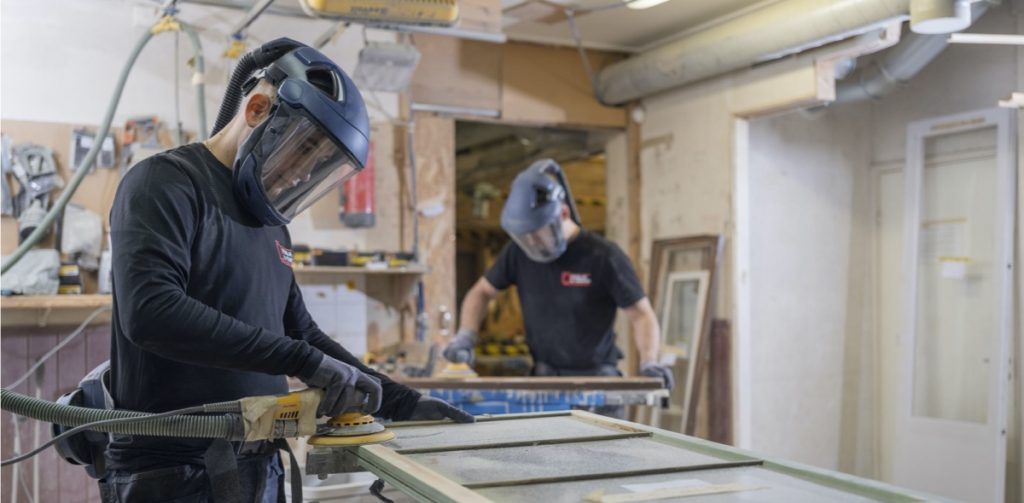
Stefan describes the company’s identity in one phrase: “the Penslar & Fönster standard.” It is not a marketing slogan, but the minimum level they accept. If something is not good enough, it is redone – even if that causes delays.
– I’ve called and said: We’ll be delayed by two weeks, because I’m not satisfied with the quality, he says.
That can be difficult in the moment, but it has built trust: customers know what they are getting.
Stefan himself has worked on the shop floor and speaks the employees’ language. He meets people in the workshop, follows up on the work and handles dialogue face to face.
Training their own craftspeople
There are few fully trained window renovators. That is why Penslar & Fönster has developed its own training model, where new employees begin at simple stations and gradually learn the entire process.
– If you have the right attitude, the willingness and a bit of manual skill, you can learn this work in a couple of months.
In this way, the company builds expertise in-house while also creating continuity in the work. The same applies to many of the subcontractors, some of whom have worked with Penslar & Fönster for up to ten years. This provides both stability in delivery and a shared understanding of the level of quality the company expects.
Renovating instead of replacing
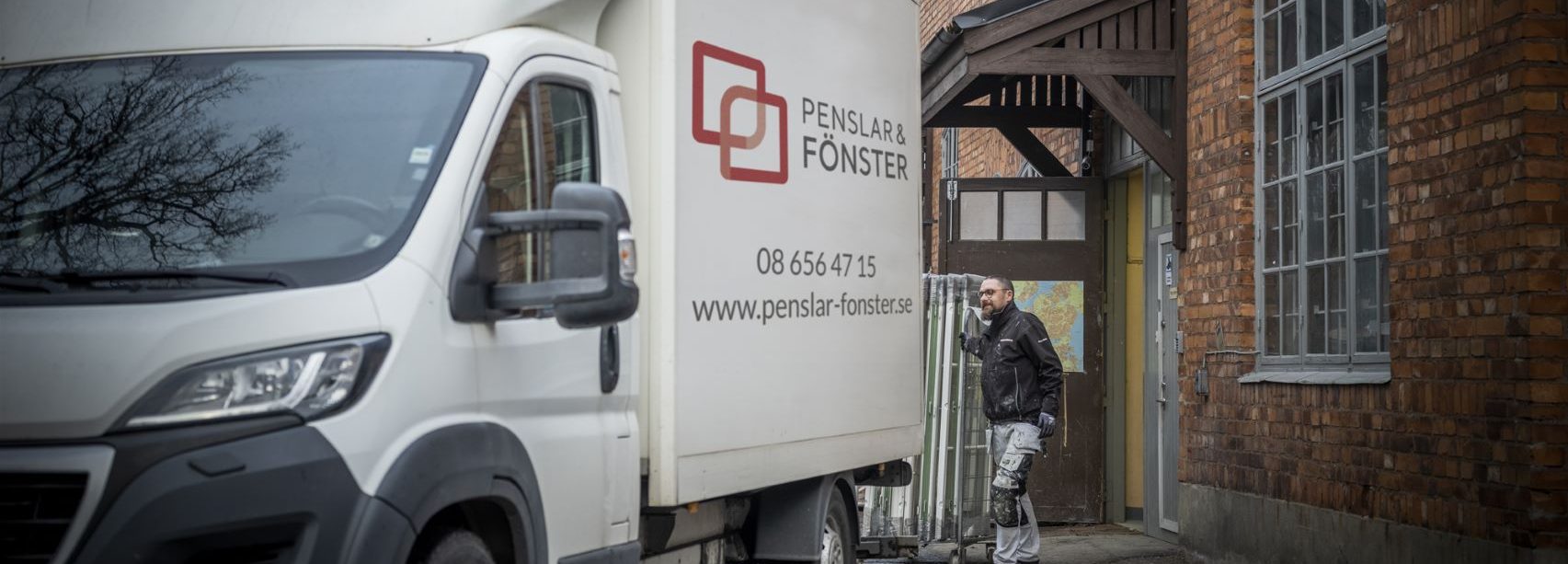
This way of working is also closely tied to the company’s business idea. Sustainability is built into the model itself: preserving and improving instead of discarding and replacing. For property owners and housing cooperatives, this means lower energy loss, longer service life and better economics – without having to replace the entire window.
– We protect the environment when we renovate instead of buying new, says Stefan.
At the same time, it is precisely this combination of craftsmanship, quality and energy efficiency that has made the company resilient in a demanding market. While many Swedish companies have struggled in recent years, Penslar & Fönster has grown from 28 to 44 million kronor in three years. Stefan points to three reasons: renovation is less sensitive to economic cycles, energy savings are driving demand, and they are simply very good at what they do.
A craft business with its own systems
Although the business is built on traditional craftsmanship, the company has also focused on developing modern support tools around its operations. Penslar & Fönster has therefore created its own web- and app-based system for project reporting and customer documentation.
– What used to take ten to fifteen hours to manage now takes around an hour and a half, says Stefan.
The system also gives customers a better overview, especially of changes and additional work, which are always approved in writing. This contributes to clearer communication and more efficient processes – something many business customers appreciate and return for, whether with the next property or the next project.
That is how Penslar & Fönster has been built: by doing one thing exceptionally well.
With clear processes.
High standards.
And respect for the craft that everything is built on.